
2026 Monthly Meetings
‘Veg on the Ledge – and a whole lot more’
Julia Parker
Wednesday 11th March 2026 @ 7.30pm
Preceeded by The Spring Flower Competition 6.00-7.00pm
Julia is passionate about growing fruit and vegetables. Completely self-taught, she says it is not difficult to ‘grow your own’, you just need a little organisation and to be aware of the seasons. She runs workshops from home sharing sustainable ideas and gardening tips.
Co-author of The Little Growers Book, she is keen to encourage children to understand where their food comes from. Her talks are informative and fun, and this evening should give us ideas to grow veg ready for our own Annual Flower Show in August.
‘Barnsdale after Geoff (1996-present day)’
Nick HamiltonWednesday 11th February 2026
Talk and Tea, was our successful February Meeting format and once again, we return to Boxgrove Village Hall for this popular event. This year we welcomed Nick Hamilton, who’s father Geoff will be fondly remembered as the long-serving presenter of Gardeners’ World from 1979-1996.
Nick Hamilton developed his passion for gardening, aged 9, when his father purchased a derelict garden centre in Kettering. He worked with his dad at weekends and during school holidays. He trained at Writtle College and took a National Diploma course in commercial horticulture. His sandwich year placement sent him to Darby Nursery Stock in Norfolk, one of the largest wholesale container nurseries in the country and they asked him to return for full time employment once his course had ended.
Nick gained valuable experience there and at other nurseries until his father purchased a piece of land, adjacent to Barnsdale, in 1989. This land formed the nursery and ultimately part of Barnsdale Gardens and Nick worked closely with his father in the family business.
Nick took over the running of Barnsdale Gardens when Geoff died and has developed it into the inspirational garden that it is today, which is not only a credit to a great man but also to Nick’s passion, foresight and hard work. These inspirational gardens are still run using organic and peat-free principles and are visited annually by about 30,000 people, who range from keen gardeners to non-gardeners with all learning a bit, as well as just enjoying a trip around a beautiful garden. You will find Nick at Barnsdale on most days, occupying the “hands on” role he so enjoys.
Over the years Nick has also managed to fit in appearances on Gardeners’ World, writing books, being a regular contributor to gardening magazines, contributing to the various Talks Stages at major flower shows, tutoring most of the courses being run at Barnsdale whilst still getting out and about. Nick has displayed in the Great Pavilion at The Chelsea Flower Show and in the floral marquee at the Gardeners’ World Live Show. He is also the President of The Cottage Garden Society, a position he took up in 2007.
Full event report to follow shortly.This year’s raffle proceeds were split equally between two charities:
The Sussex Snowdrop Trust, in support of their work providing ‘Nursing Care at Home’ for local children who have a life-threatening or terminal illness.
St Wilfrid’s Hospice, an independent charity which supports local people in our community who are living with a life-limiting or terminal illness.
‘Chelsea Secrets’
Pip Bensley
Wednesday 14th January 2026, 2.30 pm
Lavant Memorial Hall
Tea/coffee available after the talk
On a dull and cold January afternoon, members were taken on a journey of discovery when Pip Bensley took us ‘Behind the Scenes at Chelsea Flower Show’.
The grounds of the Royal Hospital Chelsea are a grassy area in central London and it is transformed into world’s most prestigious flower show. RHS Chelsea Flower Show is the jewel in the crown of the horticultural calendar.
Pip described the complete process from start to finish; the planning; the planting; the nurturing of plants to be in top condition on opening day right through to the final clearing up; recycling of paving; compost and waste after the event. Leaving the grounds as they were before the show started.
A tremendous amount of work – and worry – is expended to produce this special week in May.
Pip worked at Hillier Nurseries and was part of the team who designed and built their 25 Gold Medal winning show gardens.
She then told us of her move into Floral Art, winning three gold medals herself before turning her hand to judging and is now a judges’ mentor. She explained how the judging takes place, the great care that is taken to ensure that each exhibit is judged fairly under a number of different criteria.
It was a fascinating insight indeed.
2025 Monthly Meetings
Scroll down for reports
‘Gales, Greenhouses & Global Warming’
Ian Currie
Wednesday 10th December, 2025
Lavant Memorial Hall at 7.30pm
On Wednesday 10th December, an extremely mild day, a weatherman gave a talk to Lavant Horticultural Society titled ‘Gales, Greenhouses and Global Warming’.
Ian Currie is a full-time weatherman who gives forecasts to gardeners and growers on BBC Radio Surrey and Sussex.
Ian has been interested in weather since he was a boy, and he has an amazing memory for everything related to weather!
He was able to tell us that the previous day (9th December) had been the warmest 9th December with a temperature of 17oC recorded in the UK. In Storrington it had been 14oC whereas the norm would be about 7oC.
He talked about weather conditions in other parts of the world that are the same latitude as Lavant – for instance Churchill in North America where the temperature on 9th December was -24oC.
The lowest average January temperature of -27oC has been recorded in Ulaanbaatar (the capital of Mongolia) which is an exceedingly long way from the sea, yet it is a similar latitude to Paris and Munich. Here in the UK, we are warmed by the Gulf Stream.
Ian also told us about some very cold winters in the past – including 1684 (the coldest winter recorded) when the River Thames froze over and the temperature dropped to -3.5oC in January. He gave us facts and figures relating to white Christmases, snowfalls, and an avalanche in Lewes (in the 1830’s).
Massive warming took place in the 20th century. Despite slowing in the 1960’s, it accelerated in the 1990’s and subsequently.
Ian finished by saying that there are a lot of factors that influence our weather. Some are natural but others are man-made, and global co-operation is needed to manage it.
‘Putting your Roses to Bed for the Winter’
Liz Sawday
Wednesday 12th November 2025
‘Knee height in Autumn, ankle height in Spring’ This useful pruning mantra was among the many tips on the care of roses given by Liz Sawday of Apuldram Roses. However, rambling roses, which flower on the previous year’s growth, should be pruned immediately after flowering. Liz emphasised the importance of both feeding with good quality rose food over the summer and treatment with Sulphur Rose all year to inhibit blackspot on leaves.
‘Shrubs; Discover the Perfect Plant for every Place in your Garden’
Andy McIndoe
Wednesday 15th October, 2025
Preceded by the Autumn Flower Competition
We were very pleased to welcome Andy McIndoe back to Lavant Horticultural Society, not only to judge the Autumn Flower Competition but also to give us an excellent talk about every possible aspect of Shrubs.
He covered soil types, garden sizes, positions, habit, foliage, flowers, fragrance, colour and pruning.
All were illustrated with fabulous slides, showing these impressive plants along with both simple and complicated plant names and lots of humour. What a very enlightening and enjoyable evening for the large audience.
His book of the same name ‘Shrubs: discover the perfect plant for every place in your garden’ is a very useful addition to all gardeners’ bookshelves.
Andy McIndoe
‘Succession Planting’
Steve Edney
Wednesday 10th September, 2025
It was good to welcome back Steve Edney from The No Name Nursery in Sandwich, Kent where he has been working his 3-acre site for just over 5 years. The No Name Nursery
The nursery is named after No Name Street in the same town, as opposed to Steve not knowing what else to call It!
Steve was a very knowledgeable and entertaining speaker who has been a dedicated horticulturalist since leaving school.
When planning your garden, he recommends a visit to the RHS Trial Gardens, where you can judge characteristics of plants that might be suitable for your garden.
Many of his comments were well illustrated by a video of the nursery’s 100 x 6 metre long border showing structure, colour and succession right through to mid-winter.
Altogether an evening full of ideas when considering future planting. Members also enjoyed buying some of the excellent plants Steve had brought along.
‘Succession Planting’ was the subject of his talk which was based on 10 basic rules:
- Know what you’re growing – Start with pencil and paper, list the plants already in the garden, noting when they flower and for how long.
- Use bulbs for early colour.
- Spend time making notes and planning a timetable – it won’t happen overnight.
- Water the roots of plants just before they flower, they’ll then flower for longer.
- Foliage and form are as important as flowers – take some black and white photographs, these make it easier for the eye to judge suitability, so that colour is not a distraction.
- Use long-flowering plants to anchor your border around.
- Deadhead – like your life depends on it, aided by a G’n’T if it helps.
- Don’t neglect late-flowerers and seedheads.
- Make use of perennials that are dormant in summer.
- Embrace annuals and exotic plants.
‘From Cutting to Garden Centre
How Plants are Grown for your Garden’
Graham Spencer
Wednesday 9th July, 2025
Graham Spencer runs Plants for Europe which offers plant breeders guidance through the whole development process.
‘I didn’t know that’ was the phrase Graham wanted to hear from his audience and it was certainly the response to this entertaining and very informative talk.
From the delicate transfer of pollen by breeders to the appearance on trolleys outside your supermarket or in the garden centre is a fascinating life journey for our plants.
We learned that the best breeders had the biggest skips of rejected plants – only those of the best quality being kept. Sometimes 20 from a trial of 2,000.
The cuttings, after a thorough evaluation, comparisons and testing for pests and diseases, are sent to sunnier climates for rooting. At all stages, testing for pests and diseases is rigorous.
One of the most impressive aspects of plant production was the vast spaces used and the numbers of plants grown.
Upon return to Europe, many to Amsterdam, the cuttings go to a rooting station. A video showed a robot transferring each small plant into a cell of growing medium with efficiency and speed. Millions of plants are grown in huge glasshouses but they are watered by hand as humans are still best at checking the health of plants!
However, robots win in the speed and accuracy of the spacing of containers.
Graham continued the story with the transport to retail outlets where trays are recycled and trolleys marked with identification data so that they could be returned correctly. He also told us about marketing, international shows and so much more.
We will certainly view our much-travelled plants with more respect in future.
‘Super Seasonal Displays’
Mark Saunders
Wednesday 11th June, 2025
We were very pleased to welcome Mark Saunders (Head Gardener at Fittleworth House for 26 years) back to Lavant Horticultural Society once again. In particular on this occasion when he had had a traumatic day thanks to his very young puppy needing emergency vet treatment and a NGS Fittleworth House Garden open day.
Undaunted he gave his usual, colourful talk, concentrating on ideas for each season, and finding inspiring views from a range of gardens.
He reminded us of the importance of planning ahead, labelling, and variety of colour and form for displays. How growing plants from seed widens our range without being too expensive, as does mixing our own compost with commercial brands.
There were also plenty of ideas to copy, such as ferns and grasses enhancing shady areas; mixing flowers and vegetables: using ground cover colour like forget-me-nots between single plants and under tulips, which also suppresses weeds.
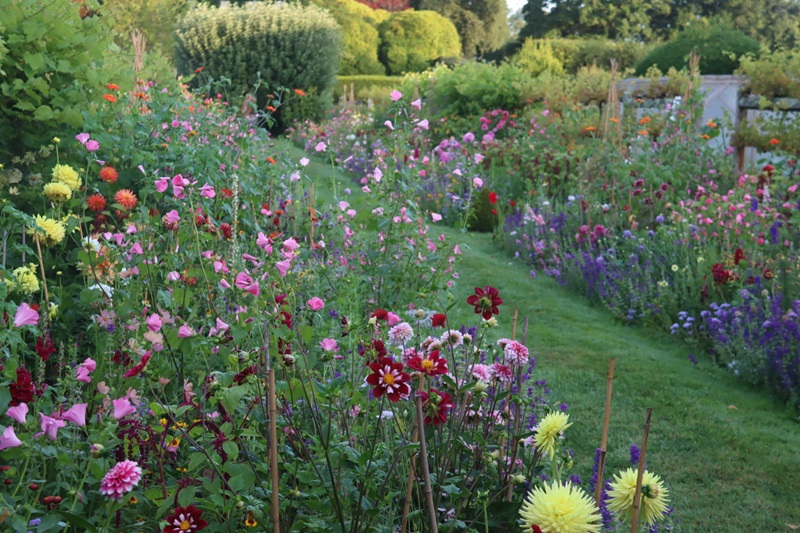
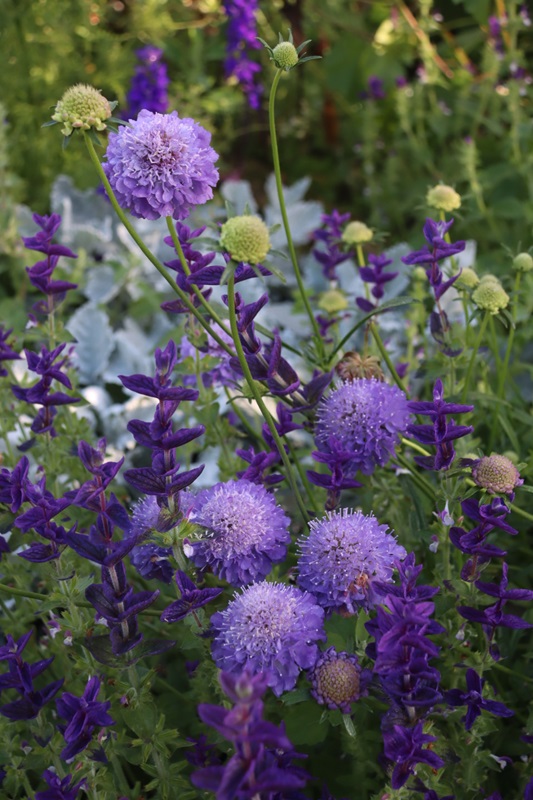
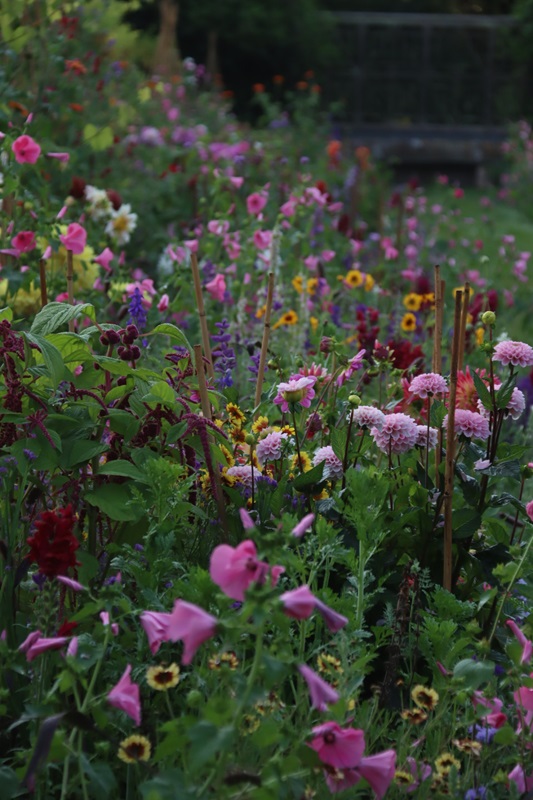
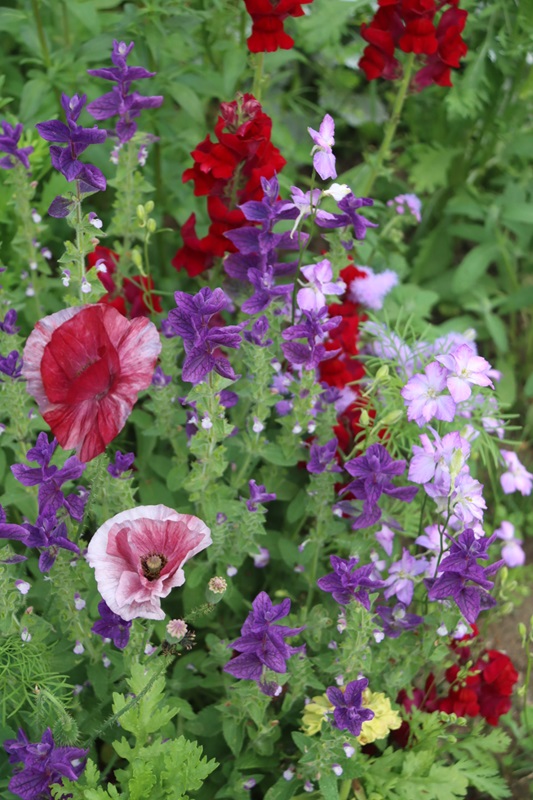
Simple displays with watering cans, sculptures and pots created the ‘super’ effects we crave. Pots of flowers can be a great display on their own or added between other planted species. His talk inspired us to think of the effect our planting has on those who will look at the results as well as our own satisfaction in trying to fill each season with fruitfulness.
Click to enlarge

‘SUMMER SOCIAL’
Wednesday 11th June 2025
Members gathered early before the talk for a glass of prosecco, a few nibbles, and to meet and mingle with other members. The turn out was good on this sunny evening, despite a warning that the A286 was going to be closed for all with a homeward journey using that road. Forward planning by our Programme secretary rescued the evening. Negotiating with the contractors for an agreed convoy to come through at 9pm, meant that everyone was able to stay for Mark’s engaging talk which followed.
‘Dahlias’
Richard Ramsey
Wednesday 9th April 2025
Richard’s talk covered Classification, Propagation and Maintenance.
From fairly insignificant flowers originating in Mexico, Central and South America Dahlias were initially developed in Spain. Further development by Dr Dahl in 19th century Germany produced Fancy and Pom Pom varieties. At one time eating the tubers for medicinal purposes was advised but it did not catch on!
We amateur gardeners were guided through the year from reviving tubers in February, taking cuttings, potting on, planting out and tying to supports.
Propagation by cutting ensures plants that are true to type, as seeds can cause genetic variations and inferior flowers.
As florists prefer long stems, Richard emphasised the importance of disbudding to leave long, strong stems and good flowers.
Detailed information and colourful slides made an entertaining evening and generated enthusiasm to grow these varied, increasingly popular plants.
Several members bought tubers on the night, so let’s hope they grow well and put in an appearance at the Annual Flower Show this year.
‘Hardy Annuals’
Pamela Holt
Wednesday 12th March 2025
Pamela Holt, a keen rock climber and photographer, has used these skills in her travels in Europe, Russia and Africa. She collected plants for the Royal Botanic Garden at Kew when visiting Peru and Bolivia.
On Wednesday 12th March, her talk entitled ‘Hardy Annuals, covered a comprehensive description of the areas in the world where they originate. As these are either hot and dry or cold and dry they are the easiest of the three kinds of annual to grow. They can be sown directly outdoors into finely raked, relatively poor, soil in the flowering position.
Ideal for the economical gardener because the seeds are easy to collect and store for sowing the following spring.
After guiding us through the origin of the plant names, many from Greek myths, she showed slides of many examples of both common and exotic flowers.
‘Plant Hunter and Gardener with Passion’
Tom Hart Dyke
12th February 2025
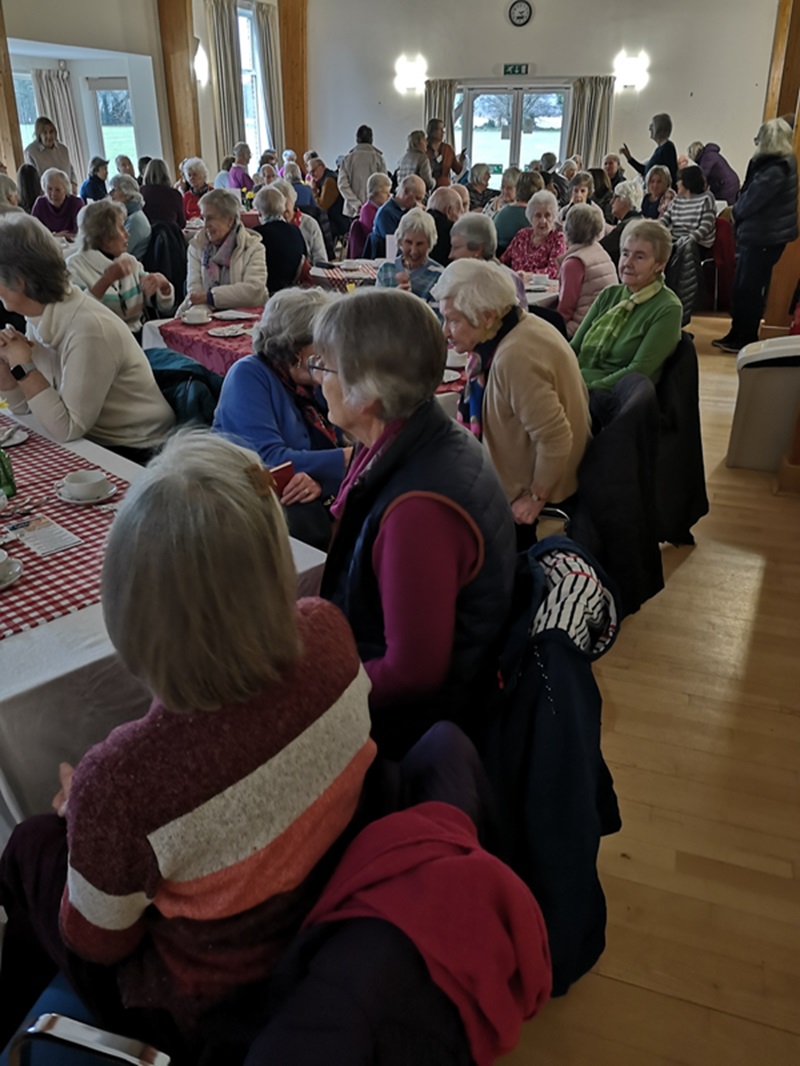
Tom Hart Dyke gave this talk to more than 100 members and their guests, at our February meeting held at Boxgrove Village Hall.
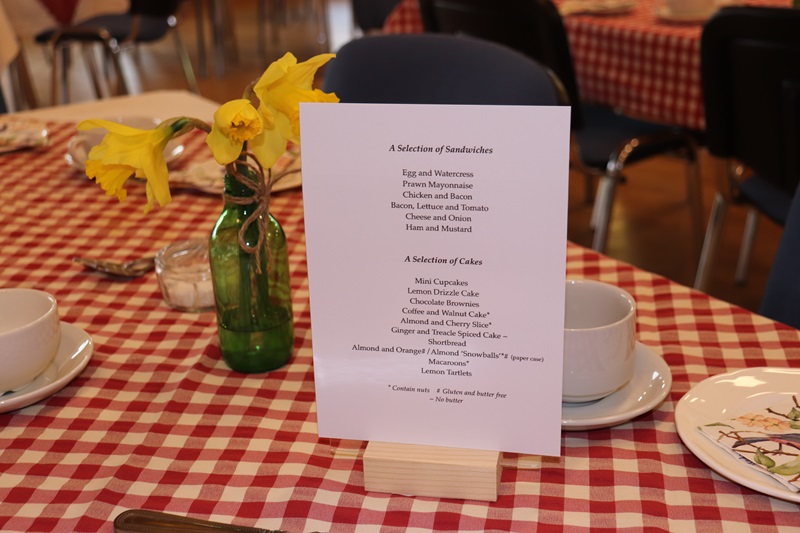
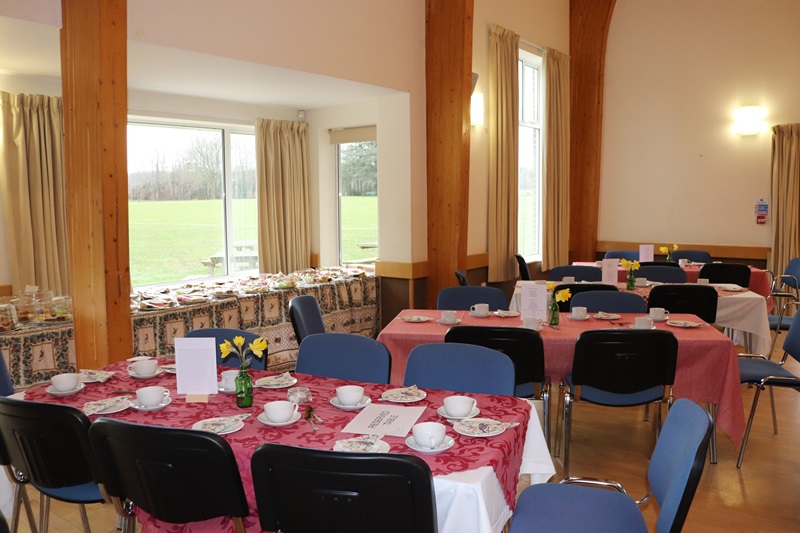
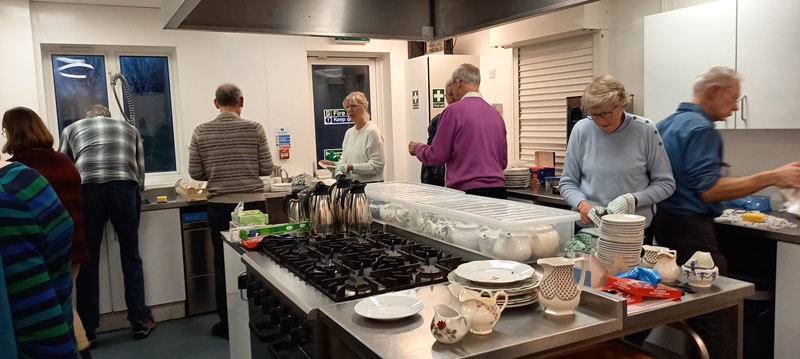
Tom gave a vivid, enthusiastic description of his plant hunting adventures around the world, and this was followed by an excellent afternoon tea provided by the hard-working club members who make up our catering team.
The Hart Dyke family has lived at Lullingstone since 1316 and they still live in one of the towers of the Tudor Gatehouse of 1496. Once stretching north as far as London the area today is a modest 126 acres, but still full of interest.
Tom spoke of his Granny who inspired his love of plants by giving him a packet of seeds and a trowel when he was just three years old. It is never too early (or too late) to discover the joy of growing common or exotic plants. His other Grandmother maintained a silk worm farm supplying beautiful material for many special Royal wedding and Christening garments.
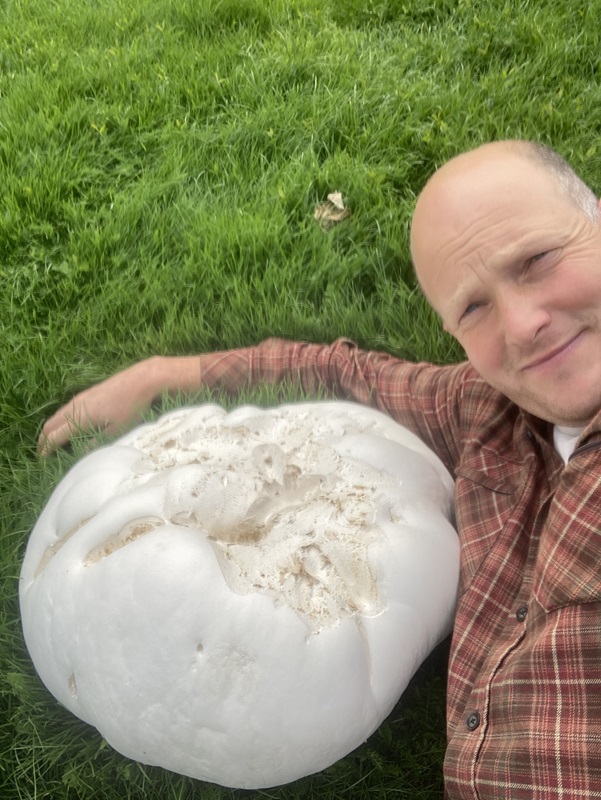
In the summer of 2020, days of heat and drought, the temperatures of 40OC, caused the lawns to dry and turn brown but when rains finally came the grass returned to green and giant puff balls, some a metre across, sprang up.
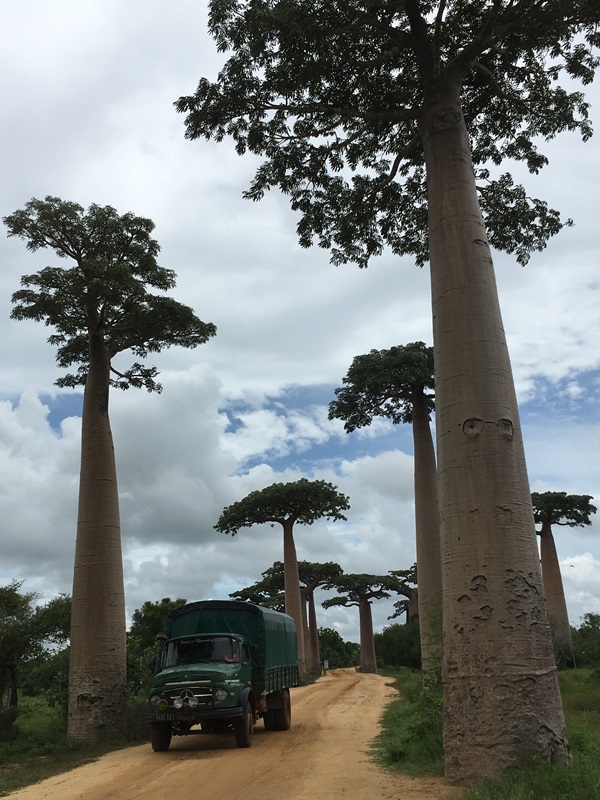
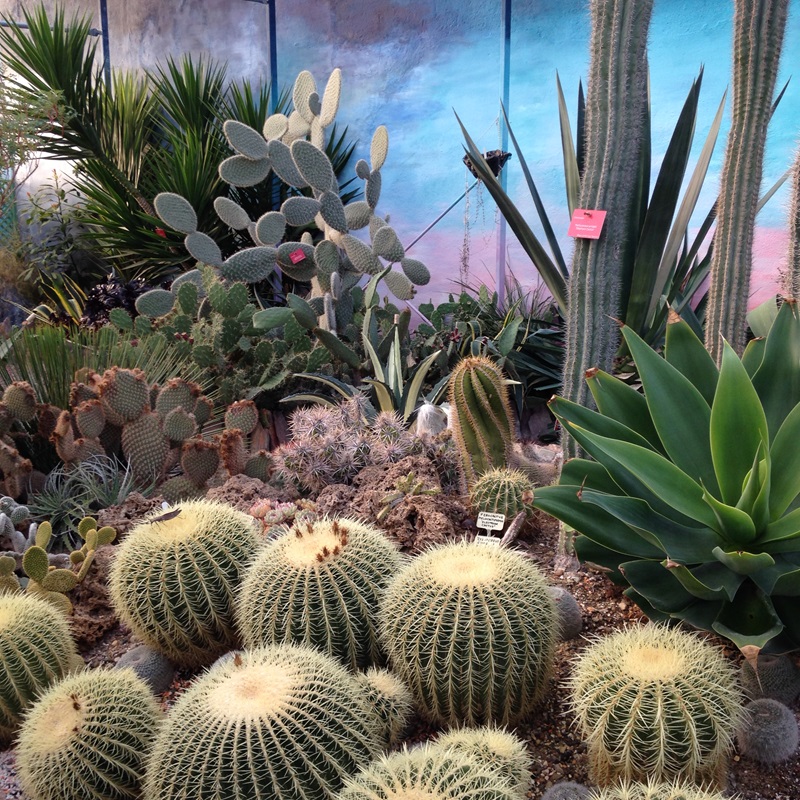
Having received grants to travel for plant collection he visited every continent except Antarctica This part of his talk was accompanied by fascinating, colourful slides of orchids, Protea, Strelitzia, Baobab trees and many more.
However, the most hair-raising section was his capture, at gun point, in Columbia in 2000. Several months in captivity followed, during which time he and a friend were kept on the move as his captures criss-crossed the jungle. Towards the end as they feared for their lives, Tom planned a World Garden, which thankfully he has since been able to create at Lullingstone.
Sited within the walled garden he has planted vegetation from each continent he has visited, laid out in the shape and global position of each. This World Garden with polytunnels, glasshouses and more, including The National Collection of Eucalyptus, accredited in 2009 with around 100 different provenances, is all well worth a visit. Lullingstone Castle
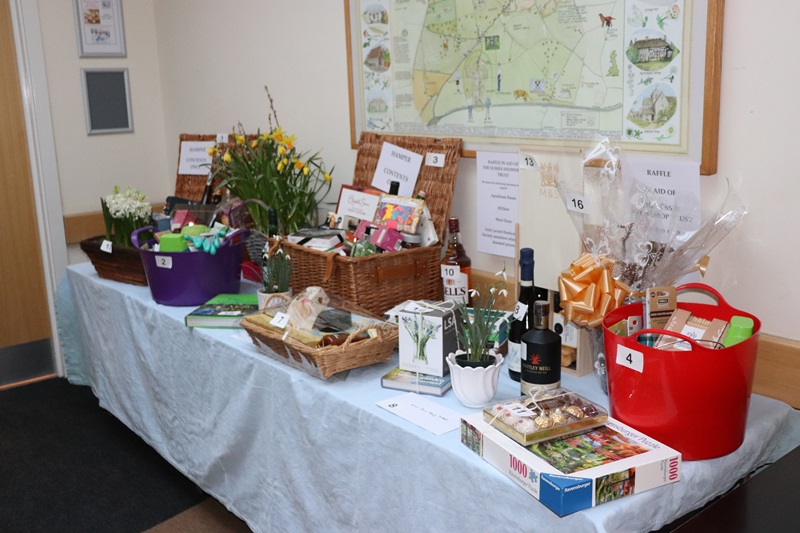
The talk was followed by a fabulous afternoon tea and an extensive raffle in aid of The Sussex Snowdrop Trust. A charity that does amazing work giving home nursing care for local children (from new-born to 19-year-olds) with life threatening or terminal illnesses.The Sussex Snowdrop Trust
Click to enlarge

‘Parham Gardens, moving forwards’
Andrew Humphris
Wednesday 15th January 2025
Members and guests enjoyed an afternoon of colourful gardens when Andrew Humphris, Head Gardener at Parham House, gave this talk.
Inspired by his father, who had been an influential figure in the world of horticulture, he began by giving a resume of his extensive career which amounted to a virtual tour of some of the most interesting gardens in England.
Starting with his first job at The Savill Garden he moved to the National Trust Garden at The Courts, one similar to Hidcote in the layout of ‘rooms’. After a period at Biddulph Grange, in 2003 he became Head Gardener at Wollerton Old Hall in Shropshire.
All this was illustrated by some wonderful slides, including that of a large herbaceous border at the latter garden which was 60’ long and 16’ wide. Following a time at West Lodge Estate in Dorset he took his present post at Parham in 2021, where in addition to the large garden, there are 850 acres of parkland with a heritage breed of dark fleeced deer.
In this part of his talk Andrew described the task which he faced at Parham to eradicate the very invasive bindweed among the plants. Started in 2020, it has been a long job, which has necessitated digging out the contents of the beds, cleaning the plants, leaving each bed fallow for a while before replanting.
Clearly it had to be done in stages because nobody wants to visit a garden empty of plants with just bare soil to look at! As the team near the end of this project now, Andrew’s vast experience in both renovation and the creation of gardens and landscape will stand him in good stead as he takes Parham Gardens forward.
The Gardens are open from 20th April and are well worth a visit.
Parham House.